
Introduction
The Applied BioCode MDx 3000 Gastrointestinal PCR Panel is a diagnostic tool used to detect gastrointestinal pathogens through polymerase chain reaction (PCR) testing. Quality control (QC) measures are essential for ensuring the accuracy, sensitivity, and reliability of these panels in clinical diagnostics. With support from research by National Institutes of Health (NIH), institutions rely on stringent QC protocols to enhance diagnostic precision and patient outcomes.
Gastrointestinal Pathogen Detection Using the MDx 3000 PCR Panel
The MDx 3000 system targets multiple pathogens, including bacteria, viruses, and parasites. Centers for Disease Control and Prevention (CDC) studies highlight the significance of rapid pathogen identification in clinical settings, emphasizing its impact on disease management and outbreak control. Research from Stanford University also indicates the system’s efficacy in distinguishing multiple pathogens in a single test, which is valuable for quick and accurate clinical diagnoses.
Quality Control in PCR Panels
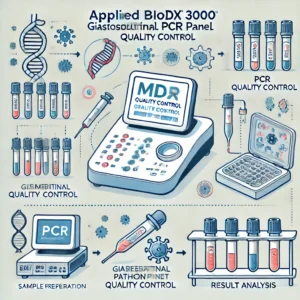
Quality control in PCR-based diagnostics, such as the MDx 3000, involves rigorous testing to prevent false positives or negatives. The Food and Drug Administration (FDA) establishes guidelines for QC procedures to ensure accuracy, while University of California, Berkeley research supports the role of internal controls in monitoring PCR sensitivity and specificity.
- Internal Controls: These controls monitor the entire process, from sample preparation to result interpretation, ensuring that each stage operates within standardized parameters. Harvard University research emphasizes the importance of these controls in validating test results.
- Positive and Negative Controls: The National Cancer Institute (NCI) explains that positive and negative controls ensure that all reagents are functioning correctly, minimizing the risk of erroneous results in clinical applications.
QC Protocols for the MDx 3000 System
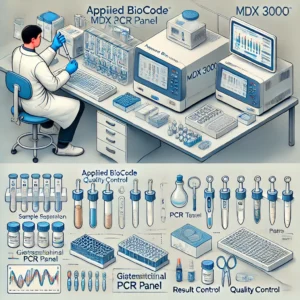
Institutions such as University of Michigan follow strict QC protocols for the MDx 3000 system, ensuring the reproducibility and reliability of PCR results. These protocols include reagent checks, calibration of the MDx 3000, and process validation.
- Reagent Preparation: High-quality reagents are crucial for reliable results. Studies by University of Washington have shown that improperly prepared reagents can compromise assay sensitivity and specificity.
- Calibration and Maintenance: Regular calibration of the MDx 3000 is vital, as highlighted by National Institute of Standards and Technology (NIST). NIST guidelines recommend routine checks to ensure consistent performance across all test runs.
- Process Validation: Process validation ensures that each component of the test performs as expected. The Mayo Clinic underscores the value of validation in minimizing discrepancies between expected and observed results.

Importance of Quality Control in Clinical Diagnostics
The importance of QC in gastrointestinal diagnostics cannot be overstated. Accurate results are essential for identifying infectious agents responsible for gastrointestinal illness. The American Society for Microbiology (ASM) explains that quality control in PCR assays helps prevent diagnostic errors that could lead to inappropriate treatments.
- Reduced False Results: QC protocols decrease the likelihood of false positives or negatives. Studies by the National Institute of Allergy and Infectious Diseases (NIAID) demonstrate that reliable PCR testing supports effective treatment by accurately identifying causative pathogens.
- Enhanced Diagnostic Confidence: QC measures give clinicians confidence in their diagnoses, contributing to better patient outcomes, as emphasized by University of Pennsylvania.
- Public Health Impact: Pathogen identification assists in disease surveillance, outbreak control, and infection prevention. The World Health Organization (WHO) and CDC rely on quality-controlled diagnostics to monitor infectious disease trends globally.
Applications of MDx 3000 in Gastrointestinal Disease Research
Research institutions use the MDx 3000 system to study the prevalence and characteristics of gastrointestinal pathogens. Research at Johns Hopkins University demonstrates the system’s effectiveness in tracking pathogens during outbreaks. Additionally, studies by the National Library of Medicine (NLM) provide insights into the genetic markers of pathogens, enhancing molecular epidemiology efforts.
- Clinical Research: The MDx 3000 system contributes to translational research by enabling the study of pathogen-host interactions. Studies from University of California, San Francisco (UCSF) underscore its importance in advancing precision medicine.
- Genetic Epidemiology: By analyzing genetic sequences, the MDx 3000 aids in understanding pathogen evolution and antibiotic resistance. Research at the University of Chicago suggests that PCR panels enhance public health initiatives through detailed pathogen characterization.
Advances in PCR Panel Technology and Future Directions
With innovations in multiplex PCR technology, the MDx 3000 continues to improve in sensitivity and range. The National Institute of General Medical Sciences (NIGMS) funds studies to refine PCR systems for faster pathogen detection. Moreover, Emory University explores the potential of portable PCR panels to enhance field diagnostics.
Conclusion
Quality control is integral to the reliability of the Applied BioCode MDx 3000 Gastrointestinal PCR Panel. By implementing rigorous QC protocols, laboratories ensure the accuracy and sensitivity of diagnostic results, which has critical implications for patient care and public health. As technology advances, quality-controlled PCR panels will continue to support accurate, timely diagnoses, helping researchers and healthcare professionals alike address gastrointestinal infections effectively.